
Practical Learning Activities That Help Children Learn Better
Children learn best when they can actively participate, explore ideas and apply what they learn in everyday situations. Practical learning activities can make education more enjoyable while helping children develop concentration, creativity, communication and problem-solving abilities.
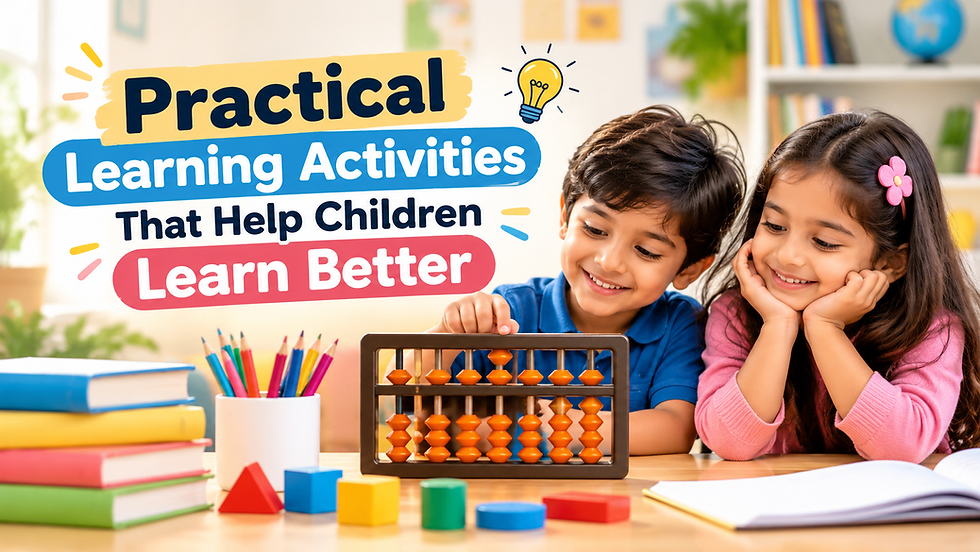
Well-designed learning programs for kids combine academic learning with activities that encourage children to think, experiment and gain confidence. From educational games and creative exercises to practical mathematics activities, these approaches can support a child's overall development.
1. Learning Through Educational Games
Educational games can turn difficult concepts into enjoyable learning experiences. Number games, word puzzles, memory games and logic challenges encourage children to think while keeping them engaged.
These activities can help improve:
Memory and concentration
Logical thinking
Problem-solving
Quick decision-making
Interest in learning
2. Practical Mathematics Activities
Mathematics becomes easier when children can connect numbers with real-life situations. Parents and teachers can use shopping calculations, counting objects, measuring ingredients or simple budgeting activities to make mathematics practical.
For children who need additional academic support, math improvement classes for kids can provide structured activities designed to strengthen calculation and problem-solving skills.
3. Creative Activities for Better Learning
Drawing, storytelling, craft projects, role-playing and simple experiments allow children to express their ideas creatively. These educational activities for children can also encourage curiosity and help them understand concepts through practical experience.
Creative activities can develop:
Imagination
Communication
Observation
Creativity
Independent thinking
4. Activities That Build Confidence
Children need opportunities to speak, participate and make decisions without being afraid of making mistakes. Presentations, group discussions, storytelling and role-playing can help children gradually become more comfortable expressing themselves.
Confidence building classes for children can provide a structured environment where children practise communication, teamwork and decision-making while learning.
5. Group Learning and Team Activities
Group activities teach children how to listen to others, share ideas and work towards a common goal. Simple projects, team games and collaborative problem-solving exercises can make learning more interactive.
These activities can strengthen:
Teamwork
Communication
Leadership
Cooperation
Social skills
6. Learning Through Everyday Activities
Learning does not have to happen only in a classroom. Everyday activities such as cooking, organising toys, planning a small shopping list or observing plants can introduce children to mathematics, science, language and practical decision-making.
Parents can turn ordinary activities into small learning opportunities by asking questions and encouraging children to find solutions independently.
7. Skill Development Beyond Academics
Academic knowledge is important, but children also need practical skills to become independent and confident learners. Child skill development programs can combine academic activities with communication, creativity, critical thinking and problem-solving.
A balanced approach helps children develop skills that can support them both inside and outside the classroom.
Questions and Answers
1. Why are practical learning activities important for children?
Practical activities help children understand concepts by applying them rather than simply memorising information. They can also improve engagement, concentration and problem-solving.
2. What activities can improve a child's confidence?
Storytelling, presentations, role-playing, group discussions and team activities can give children opportunities to express themselves and interact with others.
3. How can parents make mathematics more interesting?
Parents can introduce mathematics through shopping, cooking, counting objects, measuring and simple puzzles. Connecting maths with everyday situations can make learning more meaningful.
4. Are learning programs useful for children's overall development?
Yes. Well-structured learning programs can combine academic learning with communication, creativity, critical thinking and other important skills.
Conclusion
Practical learning activities can make education more engaging and meaningful for children. When children learn through games, creative projects, real-life situations and group activities, they have more opportunities to understand concepts and develop useful skills.
Whether through learning programs for kids, educational activities, confidence-building sessions or structured mathematics support, the right learning environment can help children become more confident, curious and independent learners.
About Arietis Education
Arietis focuses on helping children develop their academic abilities and essential learning skills through engaging and practical learning approaches.
Through structured programmes and child-focused activities, Arietis Education aims to make learning enjoyable while supporting children's confidence, concentration, mathematical ability and overall skill development.
The goal is to create a positive learning environment where children can explore, practise and develop skills that support them in their academic journey and everyday life.
👉 Click Here to Book a Demo Class
📞 +91 9866421372 | +91 8500851199 📧 info@arietiseducation.com


Comments